One of a common reason for lower back pain is due to a bulging disc. But what exactly is a disc?
The disc is a gel like substance that sits in between our bones in the spine, the vertebrae). These discs acts to help with: shock absorption, spinal stability and allows a more efficient movement from the spine. The discs are made up of two parts: the more elastic outer shell, which keeps the shape of the disc together, and the gel like inside.
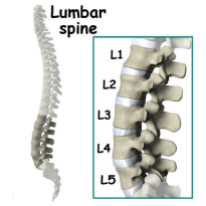
In normal movements, the disc will get compressed and extend in certain parts, depending on the movement. For example, bending forwards will result in the front part of the disc to be compressed, while the back part will be distended.
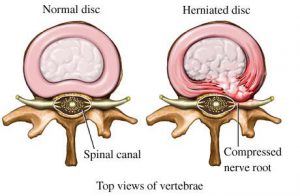
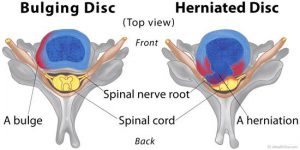
When you have a ‘disc bulge’, what happens is, instead of the outer elastic part keeping the disc’s shape, it has protruded out (this is called Bulged Disc). Depending on the severity of the injury, the gel like content can actually seep out as well! (This is called a Herniated Disc).
Symptoms
Apart from pain, this bulging disc may be severe enough that it touches the nearby nerve root. When this occurs, you may also experience the following symptoms: pins and needles, numbness, burning, electrical shocks as well as loss of power in your legs.
Diagnosis and Treatment
It is important that you seek a trusted physiotherapist that will be able to do a comprehensive assessment on you to get the correct diagnosis quickly. Without the right diagnosis, your treatment will be ineffective.
At Capital Physiotherapy, our initial appointment is 60 minutes, instead of the normal 20-30 minutes. This allows our physiotherapists the time to complete a full assessment so that the right treatment be implemented. The quicker your back is treated, the better your outcome is!
We are well equipped at providing you the best care to get you back on your feet. Treatments may include:
- Mobilisation
- Massage
- Electrotherapy
- Exercise prescription, including building core strength
- Pilates equipment, including: reformers and Wunda Chair.
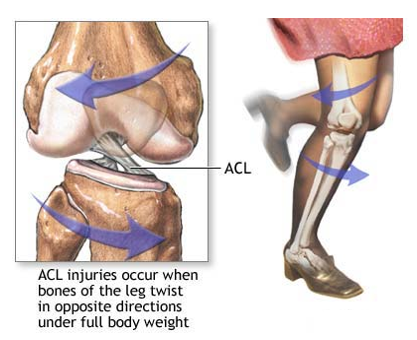 The knee joint itself involves a multitude of structures to keep it stable and strong. The Anterior Cruciate Ligament (ACL) is one such structure that helps achieve these objectives. It originates from the posterior (back) part of the femur and attaches to the anterior (front) part of the tibia. The Posterior Cruciate Ligament (PCL) meanwhile, originates from the anterior part of the femur and attaches to the posterior part of the tibia. These two ligaments crosses in the middle and provide specific stabilities to the knee.
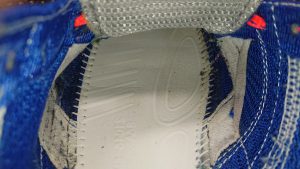 Commonly, manufacturers have advised to change your runners after 500-800 km; this is an extremely rough guide. While this figure has some use, we’re going to let you know of other signs that will help you find out if your shoes are still good to run in.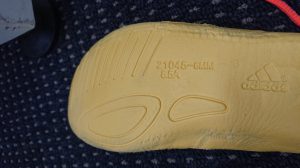
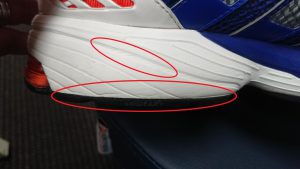
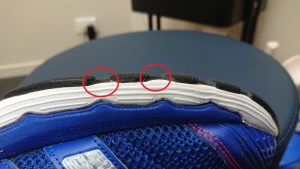 Similarly, as you pound the pavement or the treadmill, the midsole of your shoe degrades over time. Here are the signs of when you should change your shoes:
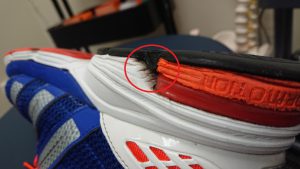 Hopefully that has helped you to find out when to change your running shoe. As much as we want to use the shoe until the upper is torn and your toes are showing, or the outsole is worn out completely, the truth of the matter is that your midsole will usually be the first to go.

 With her wealth of clinical experience – in both public and private systems, Melanie is contactable at Capital Physiotherapy’s Hawthorn Physio clinic to provide you with the best physio treatment in the Hawthorn and for the surrounding suburbs.